How Foundation Problems Actually Show Up
Most signs look small at first — that's exactly why they get ignored.
Get Foundation QuotesFoundation movement rarely announces itself as a dramatic crack overnight. It shows up as a handful of small, easy-to-explain-away signs first, and recognizing them together is usually more telling than any single one on its own.
Popped nails in the drywall
A small ring-shaped crack around a nail head means the framing behind the wall has shifted enough to push the nail outward. One is nothing. Several in the same area is worth a closer look.
A gap opening between wall and floor
When one side of a foundation settles lower than the other, the floor on that side can pull away from the wall above it — a visible gap where there wasn't one before.
Floors that aren't level anymore
Uneven flooring can mean the foundation is settling unevenly underneath it, or it can mean something unrelated, like a floor joist that's lost support. Telling the two apart is exactly the kind of thing worth a specialist's actual inspection rather than a guess.
Cracks running from door and window corners
This is one of the more recognizable signs — cracks that trace a diagonal line from the corner of a door or window frame. It's where structural stress concentrates once weight stops distributing evenly across the foundation.
Damage that shows up after a flood
Floodwater doesn't just damage what it touches on the way through — it can carry soil out from under or around a foundation, and the support that soil was providing doesn't come back on its own once the water's gone.
A chimney cracking away from the house
Chimneys are frequently built on their own foundation, separate from the rest of the structure, which means the two can settle at different rates entirely. A visible gap or crack where they meet is that mismatch showing up.
A foundation that's visibly sinking
This means the soil underneath genuinely isn't holding the structure's weight the way it needs to. It's a support problem, not a cosmetic one, and it tends not to resolve on its own.
Settling that hasn't stopped
New construction settles a little in its first few years — that part's normal. What's not normal is settling that keeps going well past the point it should have leveled out.
Doors and windows that stick
A frame that's shifted out of square from foundation movement will bind a door or window that used to close fine. It's an easy thing to blame on humidity or an old house — sometimes that's right, sometimes it's the earlier sign of something more active.
Vertical cracks in a basement wall
These typically mean soil pressure is pushing against the wall unevenly from outside. They often show up alongside a stair-step crack pattern, since concrete and block both fail along whatever path takes the least resistance.
A basement wall that's bowing inward
This one's a straight structural flag, not a wait-and-see item — a basement wall is part of the foundation holding up everything above it, and a wall that's visibly curving inward means it's losing that fight.
Horizontal cracks in a basement wall
These usually follow a period of bowing that went unaddressed, and they point to the same cause — external pressure the wall wasn't built to hold back indefinitely. Worth calling a specialist promptly rather than watching it.
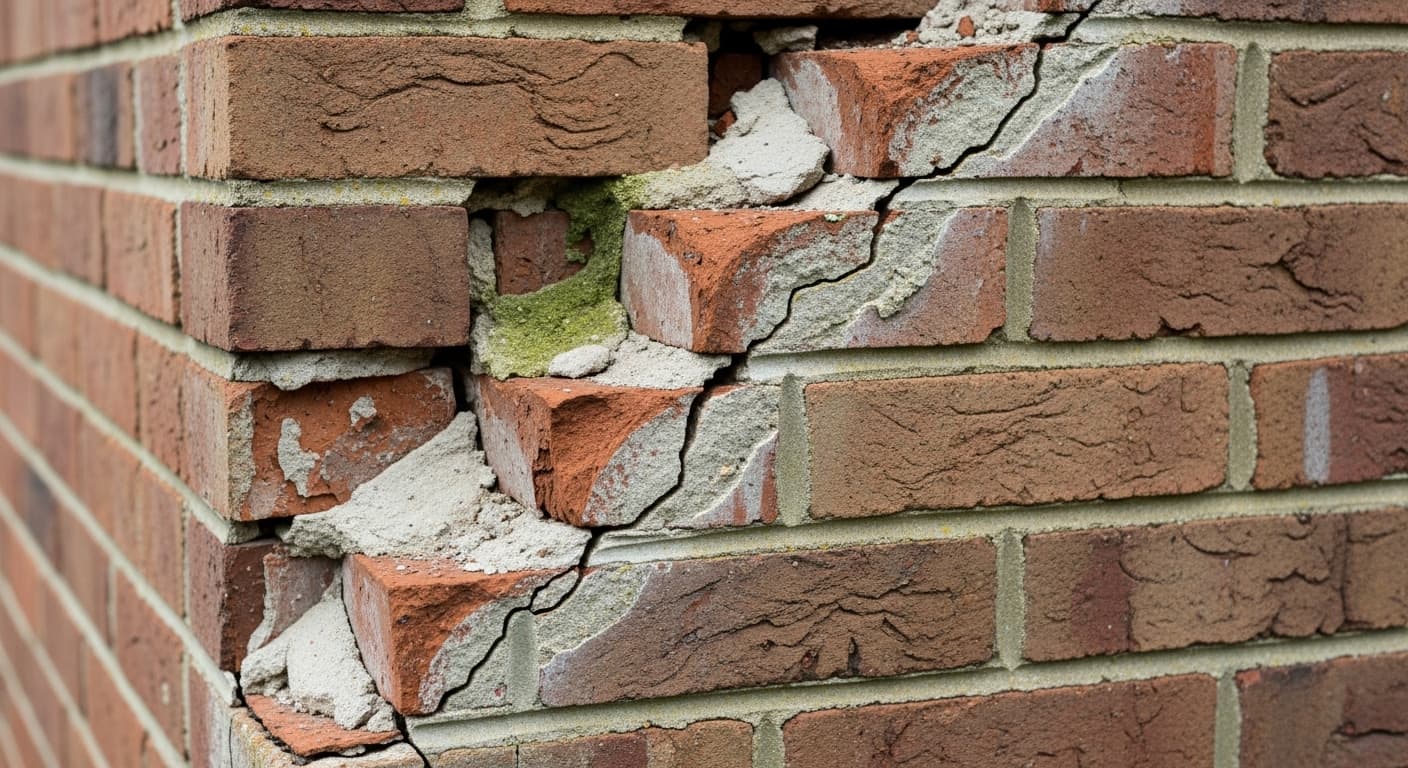
Brick cracking in a stair-step pattern
Brick, like concrete, cracks along its weakest seams — usually diagonally, in a stair-step line. It tends to appear when one side of a foundation has moved while the other side held steady, pulling the masonry apart at the mortar joints.
The same stair-step pattern in block foundations
Block foundations crack this way for the same underlying reason as brick — uneven weight distribution across the foundation, not a flaw in the blocks themselves.
Cracks in concrete around the property
A crack in a driveway or walkway isn't automatically a separate issue from your foundation — both are sitting on the same soil, and both can be responding to the same movement underneath.
Get Foundation Quotes
Takes about a minute. No cost, no obligation to hire anyone.